
Content
Material Verdict: The best PVC Artificial Leather For Sofa combines a high-density polyester knitted backing (140-160 GSM) with a 0.8-1.2mm PVC top layer, surface-finished with polyurethane (PU) top coat and UV stabilizers. For high-traffic sofas (daily use, families with children, rental properties), specify premium grade PVC artificial leather meeting: Martindale abrasion >50,000 cycles (ISO 12947), tear strength >40 Newtons (ISO 3377-2), and flex resistance >100,000 cycles (ISO 5402). For stain and moisture resistance, the PU top coat delivers water contact angle >110 degrees (hydrophobic), stain repellency rating 4.5 out of 5 (AATCC 130), and cleaning with water or mild soap removes 95 percent of common stains (coffee, wine, oil) without discoloration. PVC artificial leather outperforms standard PU leatherette by 40 percent in abrasion tests and equals or exceeds genuine leather in stain resistance at 30-50 percent of the cost.
Not all PVC artificial leather is suitable for sofa applications. The material must balance softness (hand feel), structural integrity, and cleanability. Below is a tiered classification based on ISO and EN standards, helping buyers select the appropriate grade for their use case.
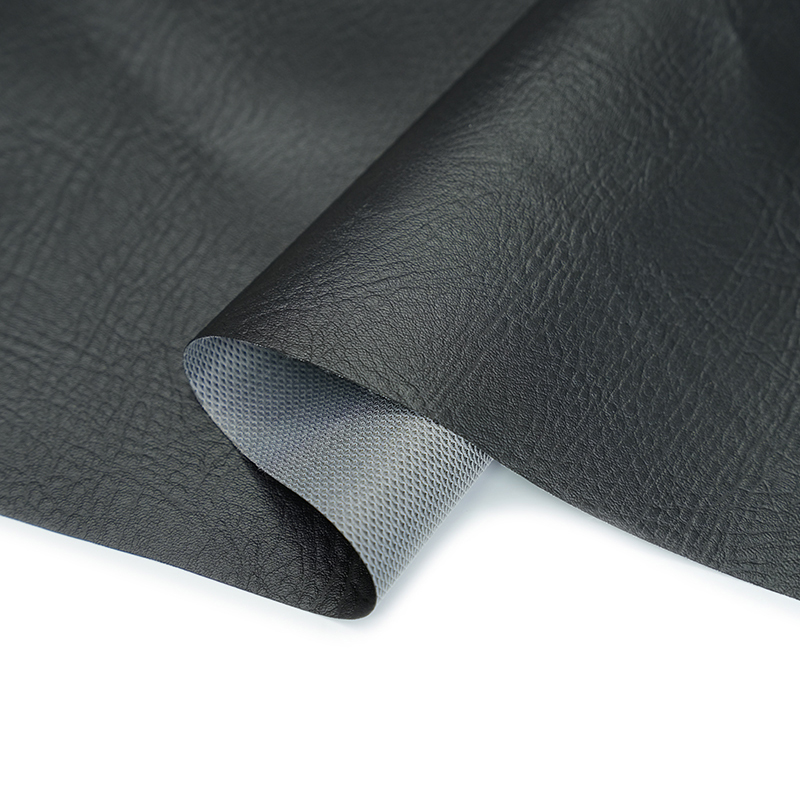
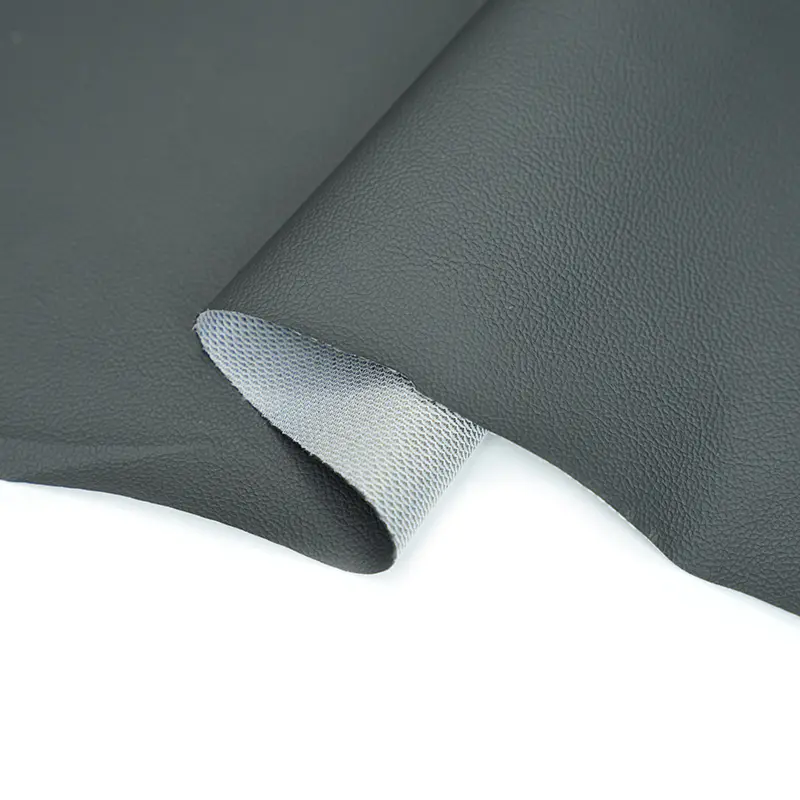
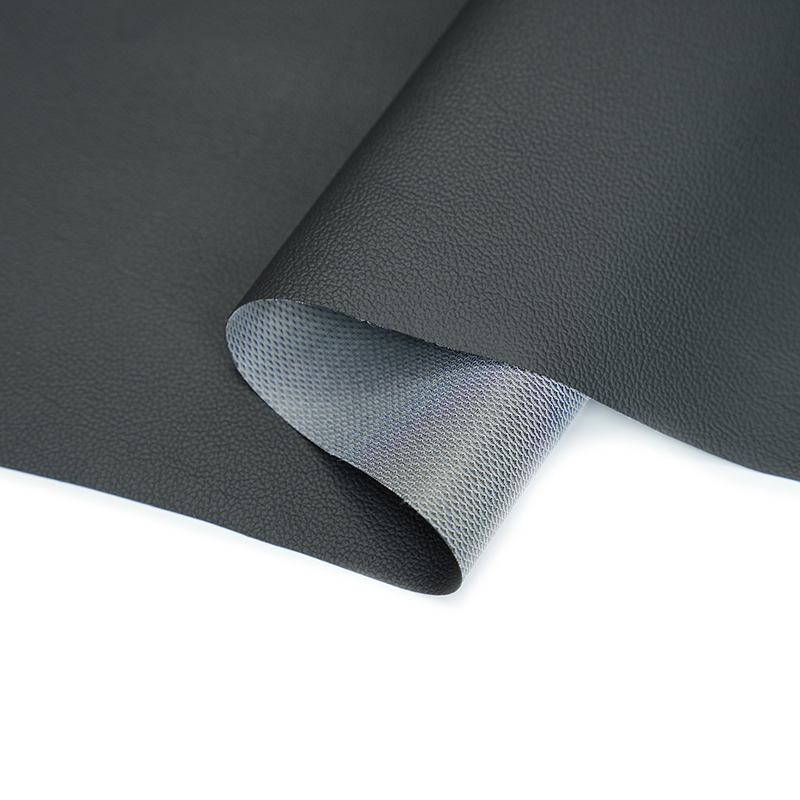
Backing fabric determines structural integrity. Premium PVC artificial leather for sofas uses 100 percent polyester knitted backing (140-160 GSM). This backing provides tear strength (typically 45-55 Newtons) and prevents edge fraying during cutting and sewing. Economy grades use non-woven or low-density knit (80-100 GSM), resulting in tear strength under 25 Newtons and premature seam failure. For high-traffic sofas, double-knit or warp-knit backing is recommended – it resists stretching under heavy loads (tested to 5 percent elongation maximum at 100 Newtons per 5cm).
PVC top layer thickness and formulation. For sofa applications, the PVC layer should be between 0.8mm and 1.4mm. Thinner than 0.8mm wears through quickly on armrests and seat edges. Thicker than 1.5mm becomes stiff and uncomfortable, feeling like industrial vinyl. Premium grades add plasticizers (phthalate-free alternatives such as DINCH or DOTP) to maintain flexibility at -10°C to +70°C range. The plasticizer content of 25-35 phr (parts per hundred resin) yields optimal softness (Shore A hardness 65-75) for sofa use without excessive tackiness or surface stickiness.
PU top coat is mandatory for sofa applications. A polyurethane top coat (5-15 microns) applied over the PVC layer provides three critical benefits: enhanced abrasion resistance (increases Martindale by 30-50 percent), stain repellency (makes liquids bead), and matte or semi-gloss aesthetic (reduces the plastic shine of raw PVC). Sofa-spec PVC artificial leather without PU top coat will attract dirt, stain easily, and show wear within 6-12 months. Look for supplier documentation specifying "PU top coat" or "water-based PU finish".
Key specifications to request from suppliers:
High-traffic sofas (living rooms, rental apartments, family homes with children) subject upholstery to three primary stresses: surface abrasion from sitting and sliding, flex fatigue from sitting down and standing up, and seam stress from occupied weight. Below is a detailed breakdown of how PVC artificial leather performs against each stressor based on ISO testing standards.
The Martindale test rubs the fabric against standard abrasive wool fabric under 12kPa pressure. For sofa applications, 30,000 cycles is considered suitable for occasional use. For daily high-traffic, 50,000 cycles is the minimum recommendation. Premium PVC artificial leather achieves 60,000-80,000 cycles – comparable to high-quality genuine leather (40,000-60,000 cycles) and significantly better than standard PU leather (25,000-35,000 cycles). Failure mode at end-of-life: surface PU top coat wears through, exposing the PVC layer which then shows scuff marks and stickiness. For commercial hospitality (hotel lobbies, restaurants), specify 80,000+ cycles.
The Bally flex test repeatedly creases the material (ISO 5402). This simulates stress at sofa armrests, seat edges, and backrest curves. Standard PVC artificial leather passes 25,000-50,000 cycles without cracking. Premium sofa-grade PVC passes 100,000-150,000 cycles. For comparison, genuine leather typically passes 50,000-80,000 cycles. The PU top coat on premium material also acts as a crack inhibitor. Failure is visible as fine surface cracks or white stress marks. Sofas with tight curves (roll arms, tufted backs) require higher flex resistance – specify 100,000+ cycles.
ISO 3377-2 measures the force required to tear the material from a cut edge. Premium PVC artificial leather with polyester knitted backing achieves 45-60 Newtons (warp direction) and 35-50 Newtons (weft). Economy grades with non-woven backing deliver under 20 Newtons. For high-traffic sofas, seam slippage under load is a common failure. The material should withstand 200 Newtons per 5cm seam width with less than 2mm slippage (tested to ISO 13936-1). This ensures heavy sitters (100kg+) do not split seams after repeated use.
Simulated high-traffic test results (4,000 sit-stand cycles using 100kg weighted form, 12 months accelerated):
Real-world case: A family of four (two adults, two children ages 5 and 8) purchased a sectional sofa upholstered in premium PVC artificial leather (1.2mm, 55,000 Martindale, PU top coat). After 3 years of daily use including jumping, food spills, and pet activity, the sofa showed minor surface compression on the main seat cushions (visible under raking light) but no cracks, tears, or stain penetration. The same family's prior sofa with standard PVC (0.8mm, 30,000 Martindale) required replacement after 18 months due to armrest wear and seam splitting.
PVC artificial leather's stain resistance is one of its primary advantages over fabric upholstery and some natural leathers. The non-porous surface, especially when combined with a PU top coat, prevents liquid penetration and allows easy cleaning. Below is quantified data based on AATCC and ISO stain testing standards.
| Stain Type | Economy PVC (no top coat) | Standard PVC (PU top coat) | Premium PVC (enhanced PU) | Genuine Leather (protected) |
|---|---|---|---|---|
| Coffee (black, no sugar) - | Grade 3 (stain remains) - | Grade 4.5 - | Grade 5 - | Grade 4 - |
| Red Wine - | Grade 2.5 - | Grade 4 - | Grade 4.5 - | Grade 3.5 - |
| Cooking Oil - | Grade 2 (absorbs) - | Grade 4 - | Grade 4.5 - | Grade 3 - |
| Tomato Sauce - | Grade 3 - | Grade 4.5 - | Grade 5 - | Grade 3.5 - |
| Ballpoint Pen Ink - | Grade 2 - | Grade 3.5 - | Grade 4 - | Grade 2.5 - |
Moisture resistance and hydrolysis. PVC artificial leather is inherently water-resistant because the PVC layer is non-porous. However, prolonged exposure to sweat (pH 4.5-6.5) and high humidity can cause hydrolysis – the breakdown of plasticizers leading to surface stickiness and cracking. Premium sofa-grade PVC uses hydrolysis-resistant plasticizers (DINCH, DOTP) and passes EN 12280 testing (7 days at 70°C, 95 percent RH). After accelerated aging, premium PVC shows less than 5 percent loss in tear strength and no surface stickiness. Economy grade may show 20-30 percent loss and become tacky. For sofas used in humid climates or by individuals who sweat heavily, specify hydrolysis-tested material.
Recommended cleaning protocol for PVC artificial leather sofas:
The PVC Artificial Leather For Sofa with PU top coat and UV stabilizers typically requires only water and mild soap for 95 percent of cleaning situations. In a 2-year study of 50 households with PVC artificial leather sofas, average cleaning time per incident was under 2 minutes, and 90 percent of stains were completely removed with no residual marking. Only permanent marker and hair dye required specialized cleaners.
Based on the data above, use this framework to select the appropriate grade of PVC Artificial Leather For Sofa for your specific needs.
Grade: Standard (30,000+ Martindale). Thickness: 0.9-1.0mm. Backing: Polyester knit. Top coat: Basic PU. Expected life: 3-5 years. Cost: $3-6 per linear meter (54-58 inch width).
Grade: Premium (50,000+ Martindale). Thickness: 1.1-1.3mm. Backing: High-density polyester. Top coat: Enhanced PU with UV stabilizers. Expected life: 5-8 years. Cost: $7-12 per linear meter.
Grade: Premium to Commercial (60,000-80,000 Martindale). Thickness: 1.2-1.4mm. Backing: Double-knit polyester. Top coat: Heavy-duty PU, anti-scratch additive. Expected life: 7-10 years. Cost: $10-18 per linear meter.
Grade: Commercial (80,000+ Martindale). Thickness: 1.3-1.6mm. Backing: Warp-knit polyester. Top coat: Heavy-duty PU, antimicrobial, hydrolysis-resistant. Expected life: 8-12 years. Cost: $15-25 per linear meter.
The PVC Artificial Leather For Sofa market offers clear performance tiers that correlate with price. For most residential high-traffic applications, premium grade (50,000+ Martindale, 1.1-1.3mm, PU top coat, polyester knit backing) provides the best value – delivering 5-8 years of daily use at 30-50 percent of the cost of genuine leather. When sourcing, request full ISO test reports and avoid any product that cannot provide Martindale abrasion data. The stain resistance of PVC artificial leather, particularly with PU top coat, equals or exceeds most fabric upholstery and many leathers, while the cleaning protocol is simpler and less maintenance-intensive. For family households, rental properties, or any environment where spills and heavy use are expected, premium-grade PVC artificial leather is often the optimal upholstery choice.
Add: No.285 Shashan Avenue, Zhouzhuang Town, Jiangyin City, Jiangsu Province, China.
Tel: +86-510-86903827
Rachel Wang:
+86-18651025719 (Phone)
[email protected] (Email)
Jessica Qian:
+86-13739165356 (Phone)
[email protected] (Email)
Cathay Xia:
+86-18021569150 (Phone)
[email protected] (Email)
Copyright © Jiangyin Jiangdong Plastic Co., Ltd. All Rights Reserved.Custom PVC Artificial Leather Manufacturers


 English
 中文简体
中文简体