
Content
Finding reliable material suppliers for industrial-scale production requires understanding technical specifications, manufacturing capabilities, and quality assurance protocols. This guide addresses critical procurement considerations for custom printed oxford fabric wholesale operations, material engineering standards, and supplier evaluation methodologies tailored for B2B purchasing managers and product developers.
Oxford fabric derives its name from Oxford University, where the basket-weave pattern was originally developed for dress shirts. In industrial applications, this weave structure—characterized by two warp yarns crossing one weft yarn—creates a balanced, durable textile substrate ideal for surface printing and coating processes.
The basket-weave construction provides several technical advantages for printing applications:
Modern printed oxford fabric production utilizes polyester or nylon filament yarns (typically 150D-1200D) as base materials, with PVC, PU, or acrylic coatings applied post-printing to achieve specific performance characteristics.
Demand patterns vary significantly across industrial sectors, with each application requiring distinct material engineering approaches:
Technical Requirements by Industry Sector:
| Application Sector | Denier Range | Coating Type | Print Method | Key Performance Metric |
| Luggage & Bags | 400D-800D | PVC/PU | Rotary Screen | Abrasion resistance >50,000 cycles |
| Outdoor Furniture | 600D-1200D | Solution-dyed acrylic | Pigment digital | UV stability >500 hours QUV |
| Industrial Covers | 800D-1800D | PVC laminated | Flexographic | Tensile strength >3000N/5cm |
| Promotional Items | 200D-400D | PU coating | Sublimation | Color fastness grade 4-5 |
The denier rating indicates filament thickness and directly correlates with fabric weight, tensile strength, and coating adhesion properties. For 600D printed oxford fabric for outdoor furniture, this specification represents the optimal balance between structural integrity and manufacturing efficiency.
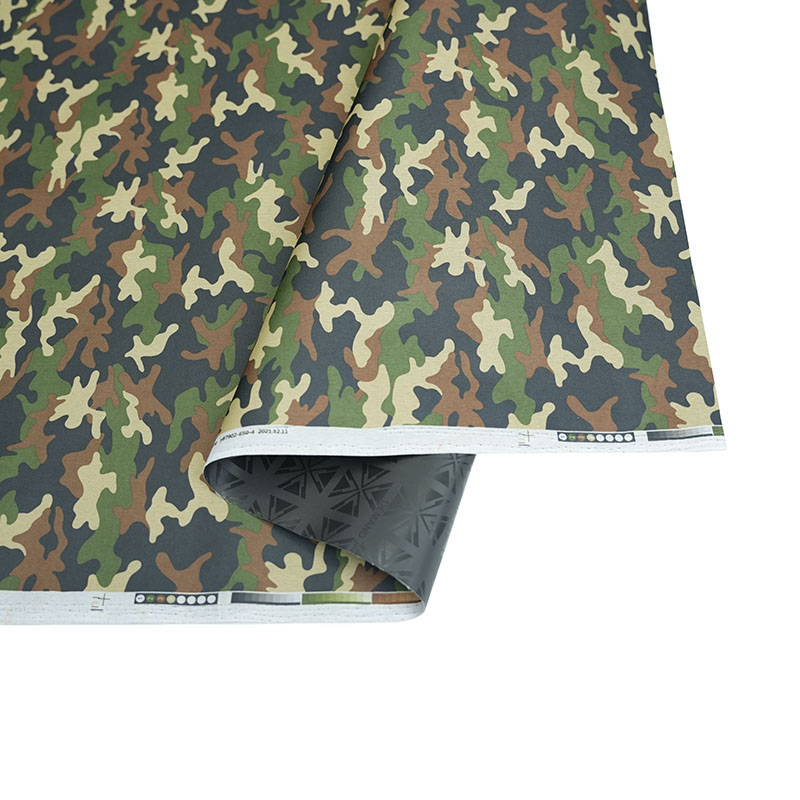
Comparative Analysis of Denier Specifications:
| Denier Rating | Weight (g/m²) | Tensile Strength (N/5cm) | Typical Applications | Coating Compatibility |
| 210D | 80-100 | 800-1200 | Lightweight bags, linings | Light PU, acrylic |
| 420D | 140-180 | 1500-2000 | Backpacks, promotional items | Medium PU, PVC |
| 600D | 220-280 | 2500-3500 | Furniture, heavy-duty luggage | Heavy PVC, TPU |
| 900D | 320-400 | 4000-5500 | Industrial covers, military gear | Laminated PVC |
| 1680D | 550-650 | 7000-9000 | Ballistic protection, extreme duty | Multi-layer coatings |
600D specifications offer particular advantages for outdoor furniture applications: sufficient body to prevent sagging under load, adequate yarn density for complex print registration, and optimal surface area for protective coating adhesion.
Post-print coating selection determines environmental resistance, tactile properties, and service lifespan. Three primary coating systems dominate industrial applications:
Print method selection impacts color gamut, production speed, and per-unit economics:
Technical Comparison of Industrial Printing Methods:
| Print Technology | Resolution (dpi) | Color Range | Production Speed | Minimum Order | Best Application |
| Rotary Screen | 80-120 | 12-16 colors | High (50-100m/min) | 3000+ meters | Large repeat patterns |
| Flat Screen | 100-150 | 20+ colors | Medium (10-20m/min) | 1000+ meters | Complex multi-color designs |
| Digital Inkjet | 300-1200 | Unlimited | Low-Medium (5-15m/min) | 50+ meters | Custom short runs |
| Transfer Printing | 200-600 | Process colors | Medium (20-40m/min) | 500+ meters | Photographic images |
Vertically integrated manufacturers demonstrate superior quality consistency and lead time control compared to assembly-type operations. Critical evaluation criteria include:
Jiangyin Jiangdong Plastic Co., Ltd. was founded in 1999, establishing operations during the critical expansion phase of China's synthetic leather industry. The company has maintained continuous specialization in PVC artificial leather and coated textile development, production, and international distribution for over two decades.
The company maintains a manufacturing area of 35,000 square meters, housing integrated production lines imported from Germany, Japan, and Taiwan. This equipment portfolio enables complete vertical integration from substrate production through final finishing:
Current annual output exceeds 60 million meters, distributed across product categories including bag leather, footwear materials, sofa upholstery, decorative surfaces, automotive matting, and advertising films. Export markets encompass Southeast Asia, the Middle East, South Africa, and developing regions requiring industrial-grade coated textiles.
This production scale supports custom printed oxford fabric wholesale requirements with minimum order quantities typically starting at 1000 meters per colorway, with lead times of 15-25 days depending on coating complexity and print design intricacy.
Bag manufacturing requires specific waterproofing performance levels depending on end-use exposure:
Waterproofing Performance Grades:
| Protection Level | Hydrostatic Head (mm) | Coating Weight (g/m²) | Seam Tape Compatibility | Application Example |
| Water-Resistant | 300-800 | 15-25 | Not applicable | Daypacks, tote bags |
| Water-Repellent | 1000-3000 | 30-50 | Hot-melt tape possible | Commuter backpacks |
| Waterproof | 5000-10000 | 60-90 | Full seam sealing required | Outdoor gear, dry bags |
| Submersion-Proof | 15000+ | 100-150 | RF welding preferred | Marine bags, diving equipment |
Bags subjected to dynamic loading require specific tensile and tear strength minimums:
Sustainable sourcing in coated textiles involves multiple technical pathways:
Verifiable environmental claims require third-party certification:
Certification Framework Comparison:
| Certification | Scope | Testing Requirements | Audit Frequency | Market Recognition |
| Oeko-Tex Standard 100 | Harmful substance testing | 300+ chemical parameters | Annual | Global textile industry |
| GRS (Global Recycled Standard) | Recycled content chain of custody | Mass balance verification | Annual | European/North American markets |
| bluesign® | Chemical management, resource productivity | Input stream management | Bi-annual | Premium outdoor brands |
| REACH Compliance | EU chemical regulation | SVHC screening | Continuous | EU market access |
Procurement strategies must balance inventory carrying costs against unit pricing advantages:
Price Structure Analysis by Order Volume:
| Order Volume | Price Multiplier | Setup Costs | Lead Time | Suitable For |
| Sampling (10-50m) | 3.0-5.0x base | High ($200-500) | 3-5 days | Product development |
| Small Batch (100-500m) | 1.5-2.0x base | Moderate ($100-300) | 7-10 days | Market testing |
| Production (1000-5000m) | 1.0x base | Low ($50-150) | 15-20 days | Standard production |
| Volume (5000m+) | 0.7-0.85x base | Waived | 20-30 days | Commodity production |
Accurate color matching and design validation require structured sampling processes:
Successful procurement of printed oxford fabric requires technical specification alignment, manufacturing capability verification, and quality assurance protocol establishment. Buyers should prioritize suppliers demonstrating vertical integration, certified testing capabilities, and documented export experience relevant to their target markets.
For organizations requiring custom printed oxford fabric wholesale quantities, evaluating manufacturing scale (annual output capacity), equipment modernization (digital printing capabilities), and geographic export experience provides reliable indicators of supply chain reliability.
Minimum order quantities vary by print complexity and coating requirements. Standard rotary screen printing typically requires 1000-3000 meters per colorway. Digital printing reduces minimums to 50-500 meters but increases per-meter costs by 150-300%. Coated fabrics generally require higher minimums than uncoated substrates due to setup waste during coating line initialization.
Outdoor furniture applications require enhanced UV stabilization (minimum 500 hours QUV testing vs. 200 hours for bags), solution-dyed or pigment-printed yarns to prevent fading, and mold/mildew resistant coating additives. The 600D specification provides adequate strength for seating applications (supporting 150-200kg loads) while maintaining sufficient flexibility for upholstery sewing operations.
Essential certifications include Oeko-Tex Standard 100 for chemical safety, GRS (Global Recycled Standard) for recycled content verification, and REACH compliance documentation for EU market access. For premium sustainability claims, bluesign® approval indicates comprehensive chemical management and resource productivity. Always verify certificate validity through issuing body databases rather than accepting documentation at face value.
Complete submersion protection requires hydrostatic resistance exceeding 15,000mm water column pressure, achieved through heavy PVC lamination (100-150g/m² coating weight) and sealed seams via hot-melt taping or RF welding. Standard waterproof oxford fabric (5000-10000mm rating) provides rain protection but may leak under hydrostatic pressure from submersion. Specify IPX7 or IPX8 ratings for applications requiring temporary or continuous immersion.
Digital printing lead times range from 5-15 days depending on order size and design complexity. Sampling requires 3-5 days, small production batches (100-500m) 7-10 days, and larger orders 10-15 days. These timelines assume approved designs and available substrate stock. Custom color matching or specialty coating development extends lead times by 10-20 days for lab dip approval and production trials.
Add: No.285 Shashan Avenue, Zhouzhuang Town, Jiangyin City, Jiangsu Province, China.
Tel: +86-510-86903827
Rachel Wang:
+86-18651025719 (Phone)
[email protected] (Email)
Jessica Qian:
+86-13739165356 (Phone)
[email protected] (Email)
Cathay Xia:
+86-18021569150 (Phone)
[email protected] (Email)
Copyright © Jiangyin Jiangdong Plastic Co., Ltd. All Rights Reserved.Custom PVC Artificial Leather Manufacturers


 English
 中文简体
中文简体