
Content
Selecting the right textile for heavy-duty applications requires a deep understanding of polymer engineering and substrate characteristics. For decades, PVC material waterproof solutions have served as the backbone for industrial covers, architectural membranes, and transportation tarpaulins. This material combines a high-strength polyester base with a specialized polyvinyl chloride coating to provide a robust barrier against moisture, chemicals, and physical abrasion. In the B2B sector, procurement managers must evaluate specific mechanical properties to ensure the chosen fabric meets the rigors of its intended environment.
The manufacturing of a pvc coated polyester fabric involves applying a liquid or laminated PVC layer onto a woven substrate. This process creates a material that is significantly more rugged than standard textiles. The base fabric provides the essential tensile strength, while the PVC coating delivers the functional protection.
PVC is a synthetic plastic material known for its inherent resistance to water and chemicals. During production, plasticizers are added to the PVC to ensure flexibility. Higher quality coatings often feature a lacquer finish, which prevents dirt migration and enhances the aesthetic lifespan of the membrane. This technical layering is what makes PVC material waterproof, so reliable for long-term outdoor exposure.
While both polyester and nylon can serve as substrates, polyester is the industry standard for PVC coating due to its dimensional stability and lower stretch. This stability ensures that the coating remains adhered even under significant tension, which is critical for structural applications like tents and awnings.
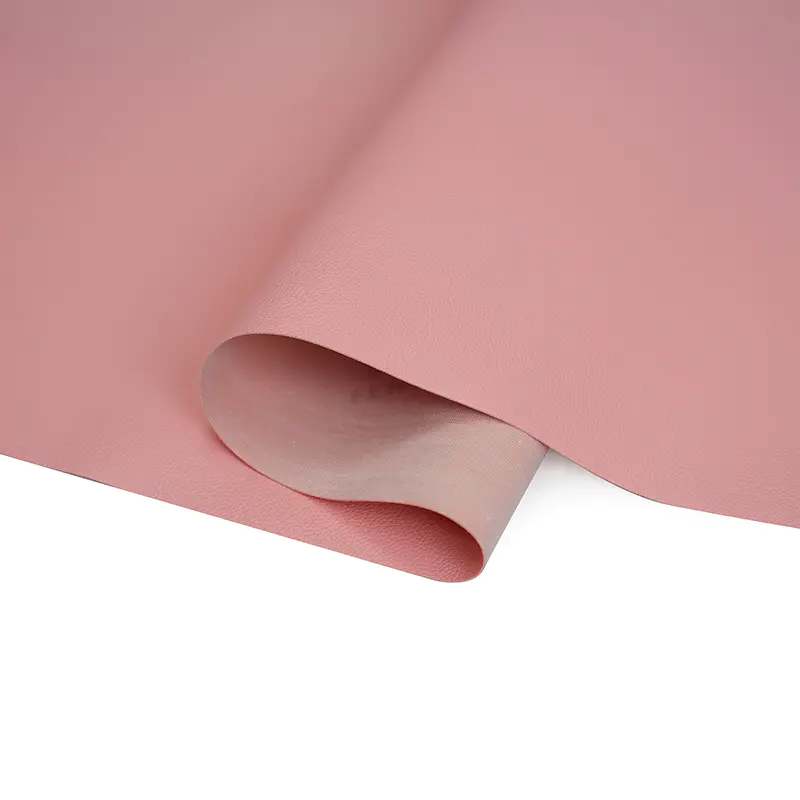
When sourcing waterproof materials, engineers often perform a PVC vs. PU-coated fabric analysis. Polyurethane (PU) is typically lighter and more flexible, making it suitable for lightweight apparel and school bags. However, PVC provides a much heavier and more "tarp-like" structure that is necessary for industrial durability.
PVC coatings generally offer higher abrasion resistance and a more structured body than PU alternatives. For industrial protection, the stiffness of PVC is a functional advantage.
| Property | PVC Coating | PU Coating |
| Weight (GSM) | Higher (350–900 gsm) | Lower (180–230 gsm) |
| Stiffness | High / Structural | Low / Soft |
| Abrasion Resistance | Excellent | Moderate |
| Waterproofing Level | Heavy-Duty | Standard |
The performance of any heavy duty pvc waterproof fabric is dictated by its denier rating. Denier measures the thickness of the individual threads in the weave. A higher denier number results in a thicker, more durable material capable of withstanding extreme stress.
For 600D fabrics, the tensile strength can reach 1200–1600 Newtons in the warp direction, whereas 420D fabrics typically range between 800 and 1000 Newtons. Tear resistance also scales with denier, with 600D providing 18–25 Newtons of resistance compared to the 10–18 Newtons found in lighter grades. This mechanical superiority is essential for products that face frequent friction or high wind loads.
The thickness of the PVC layer directly influences the hydrostatic pressure rating, measured in millimeters (mm). While standard waterproof fabrics might offer 800–1200 mm, a heavy duty pvc waterproof fabric with PVC backing can withstand pressures of 1500–3000 mm. This rating ensures that even during heavy storms or under high-pressure water contact, the material remains impenetrable.
In wholesale and manufacturing, the weight of the fabric is expressed in grams per square meter (gsm). Professional-grade pvc coated oxford fabric is usually much heavier than its PU-coated counterparts due to the density of the PVC layer. Selecting the correct weight is a balance between shipping costs and the requirePVCvc fabric durability.
Standard 600D PVC fabrics range from 350 to 550 gsm, while the most rugged 1000D variants can reach 900 gsm. Heavier fabrics provide the rigidity needed for tool bags, heavy-duty covers, and industrial biogas membranes.
| Fabric Grade | Typical Weight (GSM) | Abrasion Resistance (Cycles) | Primary Application |
| 420D PVC | 250–350 gsm | 3,000–8,000 | Lightweight Covers |
| 600D PVC | 350–550 gsm | 10,000–15,000 | Backpacks / Tool Bags |
| 1000D PVC | 450–900 gsm | >20,000 | Truck Covers / Tarps |
To maximize PVC fabric durability, strict maintenance and storage protocols must be followed. Regular inspections are recommended every six months to identify peeling or delamination. Environmental pollutants like dust, pollen, and leaves can migrate into the coating if they are not cleaned promptly.
Users should rinse the surface with clean water and apply non-ionic cleaning agents. It is vital to avoid high-pressure cleaners and hard brushes, as these can damage the protective lacquer layer. Solvents such as acetone or gasoline must be strictly avoided because they chemically degrade the PVC coating. After cleaning, the material must be completely dry before it is rolled for storage to prevent moisture staining.
The ideal storage temperature for PVC material waterproof rolls is between +10°C and +30°C. Temperatures below this range increase the stiffness of the polymer, which may lead to cracking at the creases. Conversely, temperatures exceeding 30°C can accelerate plasticizer migration, causing the material to become sticky and difficult to unroll.
The global textile market is shifting toward stricter environmental standards. The European Ecodesign for Sustainable Products Regulation (ESPR) now prioritizes durability and recyclability for all physical goods. Consequently, the industry is seeing an increased demand for PVC-free alternatives like TPO (Thermoplastic Polyolefin) for specific "green" projects. However, PVC remains the most cost-efficient and widely available solution for heavy-duty industrial needs.
In summary, PVC material waterproof solutions offer a unique combination of structural rigidity and environmental resistance that few other polymers can match. By understanding the relationship between denier, GSM, and mechanical testing benchmarks, B2B buyers can source materials that guarantee long-term performance. Whether using pvc coated oxford fabric for rugged equipment or 1000D polyester for industrial membranes, the technical integrity of the PVC layer remains the defining factor in fabric success.
Add: No.285 Shashan Avenue, Zhouzhuang Town, Jiangyin City, Jiangsu Province, China.
Tel: +86-510-86903827
Rachel Wang:
+86-18651025719 (Phone)
[email protected] (Email)
Jessica Qian:
+86-13739165356 (Phone)
[email protected] (Email)
Cathay Xia:
+86-18021569150 (Phone)
[email protected] (Email)
Copyright © Jiangyin Jiangdong Plastic Co., Ltd. All Rights Reserved.Custom PVC Artificial Leather Manufacturers


 English
 中文简体
中文简体