
Content
Textile engineers and procurement specialists recognize Oxford weave as a foundational structure in technical textiles. The addition of printed patterns transforms this utilitarian fabric into versatile solutions for demanding environments. This article examines the structural engineering and performance characteristics that define printed Oxford fabric specifications for industrial and commercial applications.
The Oxford weave employs a basket-weave variation with multiple weft yarns crossing single warp yarns. This construction creates the characteristic textured surface and dimensional stability. Custom printed Oxford textile production begins with this engineered foundation, ensuring that subsequent printing processes enhance rather than compromise mechanical integrity.
Traditional 2x1 basket construction alternates two weft yarns over one warp yarn. Modified 2x2 constructions increase fabric density and reduce yarn slippage. Engineers select weave configurations based on end-use tensile requirements and print registration accuracy needs.
Warp and weft yarn counts determine fabric weight, hand feel, and print substrate quality. Standard constructions range from 100Dx100D to 600Dx600D for polyester variants. Cotton Oxford specifications typically utilize 40s/2 to 20s/2 ring-spun yarns for natural fiber applications.
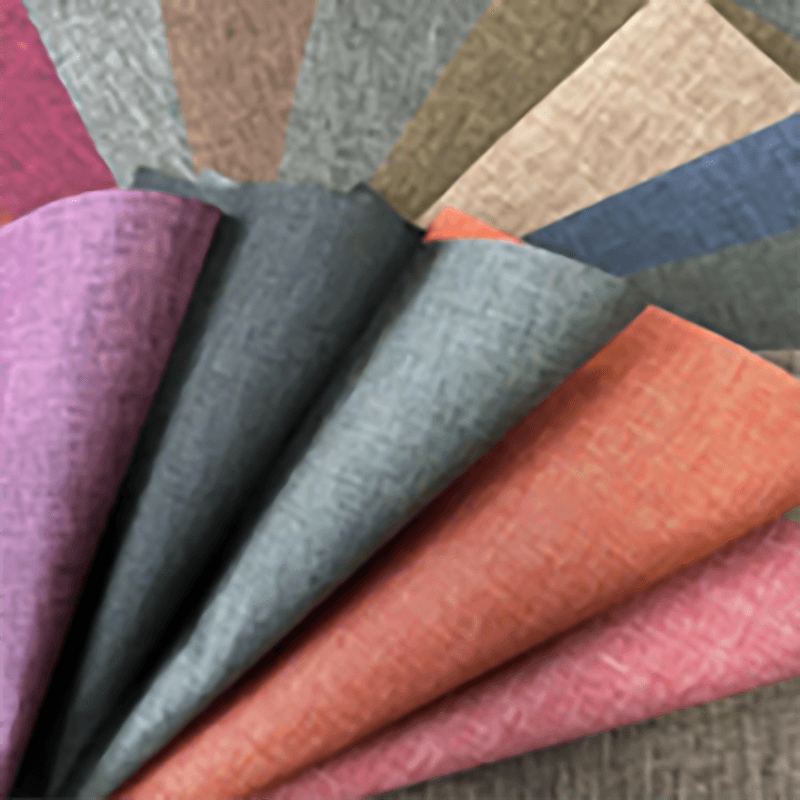
Filament polyester dominates technical printed Oxford fabric production due to dimensional stability and print colorfastness. Staple fiber variants offer improved moisture management but require more precise tension control during printing to prevent distortion.
Print method selection profoundly affects durability, color gamut, and production economics. Digital printing of Oxford material adoption has accelerated due to reduced minimum order quantities and rapid turnaround capabilities. However, rotary screen printing retains advantages for large-volume solid coverage and specific pigment applications.
Disperse dyes dominate polyester Oxford printing, achieving sublimation transfer or direct application. Reactive dyes serve cotton and cellulosic fiber variants. Pigment printing offers universal substrate compatibility but requires binder systems that may affect hand feel and breathability.
| Print Method | Minimum Order (meters) | Color Registration | Wash Durability | Best Application |
| Rotary screen | 3000+ | ±0.5mm | Excellent (50+ washes) | High-volume apparel, uniforms |
| Flat screen | 500-2000 | ±0.3mm | Very good (40+ washes) | Mid-volume technical textiles |
| Digital inkjet | 1-500 | ±0.1mm | Good (30+ washes) | Custom prototyping, fast fashion |
| Transfer printing | 100-1000 | ±0.2mm | Good (25+ washes) | Complex photographic images |
Optimal print adhesion requires engineered surface preparation. Desizing removes manufacturing lubricants that interfere with dye penetration. Alkaline scouring improves hydrophilicity for water-based ink systems. Heat setting stabilizes polyester dimensions prior to print registration.
Plasma treatment and corona discharge modify surface energy without water consumption. These dry processes enhance print sharpness and reduce environmental impact. Engineers specify treatment intensity based on fiber composition and ink chemistry requirements.
Functional finishes extend waterproof printed Oxford cloth capabilities beyond aesthetic considerations. Polyurethane coatings achieve 3000-10000mm hydrostatic head ratings for rainwear applications. Microporous constructions maintain breathability while preventing liquid water penetration.
Flame-retardant treatments incorporate phosphorus-based or halogen-free systems for protective clothing. Antimicrobial finishes utilizing silver ions or quaternary ammonium compounds address hygiene requirements in medical and institutional settings.
Multi-layer constructions combine printed Oxford fabric with functional membranes. Hot-melt adhesive lamination bonds breathable films at 100-150°C without print distortion. Flame lamination utilizes direct melting for cost-effective production with slightly reduced precision.
Direct coating applies functional polymers to the fabric surface. Knife-over-roll coating achieves precise thickness control. Foamed coatings reduce specific weight while maintaining thermal insulation properties.
Procurement specifications require objective performance verification. Colorfastness testing (ISO 105-C06) evaluates wash, rub, and light exposure resistance. Print abrasion resistance (ASTM D4966) quantifies durability under mechanical stress.
Tensile strength (ISO 13934-1) and tear resistance (ISO 13937-2) confirm structural integrity. Seam slippage testing prevents construction failures in upholstered applications. These protocols ensure that printed decoration does not compromise base fabric performance.
Technical buyers evaluate Oxford fabric wholesale printing services based on capability matrices beyond unit pricing. Color matching accuracy, lot-to-lot consistency, and lead time reliability determine total procurement value. Digital proofing capabilities reduce development cycle times and minimize physical sampling costs.
Vertical integration advantages include coordinated weave-to-print quality control. Specialized converters offer superior technical finishing but require clear communication of end-use specifications. Audit protocols should verify environmental compliance and social responsibility standards.
Standard printed Oxford fabric weights range from 90 to 300 grams per square meter. Lightweight variants (90-150 gsm) suit shirt-weight applications and linings. Medium weights (150-220 gsm) dominate the bag and upholstery markets. Heavy constructions (220-300 gsm) provide durability for technical covers and protective equipment.
Oxford weave provides superior dimensional stability for precise print registration due to its balanced basket structure. Twill constructions offer better drape and diagonal texture but may distort under tension during printing. Oxford fabrics generally demonstrate higher tear strength, while twills provide better abrasion resistance.
Yes, engineered constructions with solution-dyed polyester and UV-stabilized prints achieve 500-1000 lightfast hours (ISO 105-B02). Acrylic-coated variants provide additional weather protection. These specifications meet requirements for awnings, marine covers, and outdoor furniture applications.
Digital printing enables single-roll minimums (50-100 meters) for sampling and small production runs. Rotary screen printing typically requires 1000-3000 meters per colorway for economic viability. Flat screen and transfer methods occupy intermediate positions at 200-1000 meter minimums, depending on complexity.
Add: No.285 Shashan Avenue, Zhouzhuang Town, Jiangyin City, Jiangsu Province, China.
Tel: +86-510-86903827
Rachel Wang:
+86-18651025719 (Phone)
[email protected] (Email)
Jessica Qian:
+86-13739165356 (Phone)
[email protected] (Email)
Cathay Xia:
+86-18021569150 (Phone)
[email protected] (Email)
Copyright © Jiangyin Jiangdong Plastic Co., Ltd. All Rights Reserved.Custom PVC Artificial Leather Manufacturers


 English
 中文简体
中文简体