
 English
 中文简体
中文简体News
Home / News / Industry News / Why Metallic Film PVC Leather Needs Specific Backing Fabric for Heavy Load Bags

Content
Metallic film PVC leather has become one of the most visually striking materials in the bag and luggage industry. Its reflective surface and subtle metallic shimmer give bags a premium appearance that is difficult to achieve with ordinary synthetic leather. But the decorative top layer is only half of the story. Beneath it, a structural component determines whether the material can survive real-world use: the backing fabric. When a bag is designed to carry heavy contents, the choice of backing fabric becomes one of the most consequential decisions a manufacturer can make.
Metallic film PVC leather is a multi-layer composite material. Its outermost layer is a transparent or lightly tinted PVC film loaded with fine metallic flakes, usually aluminium particles. Below this film lies a pigmented PVC coating that supplies colour depth, and below that, an adhesive layer bonds the entire structure to a woven or knitted backing fabric.
The metallic film produces the material's signature visual effect. Depending on flake orientation, base colour, and lighting, the same material can read as polished silver, warm gold, antique bronze, or soft iridescence. This visual versatility is a key reason behind the growing use of metallic film PVC leather in contemporary bag design, a topic we explore further in the rise of metallic PVC leather in bag design.
But the metallic film also introduces mechanical vulnerability. Because the film is thinner and less elastic than the underlying PVC layer, it responds poorly to concentrated stress. When a bag panel is stretched, creased, or repeatedly flexed at a seam, the film can develop micro-cracks. If the layers beneath it — the PVC coating and the backing fabric — cannot absorb and distribute that stress, cracking and separation follow. The backing fabric is, in effect, the component that shields the metallic surface from the consequences of daily use.
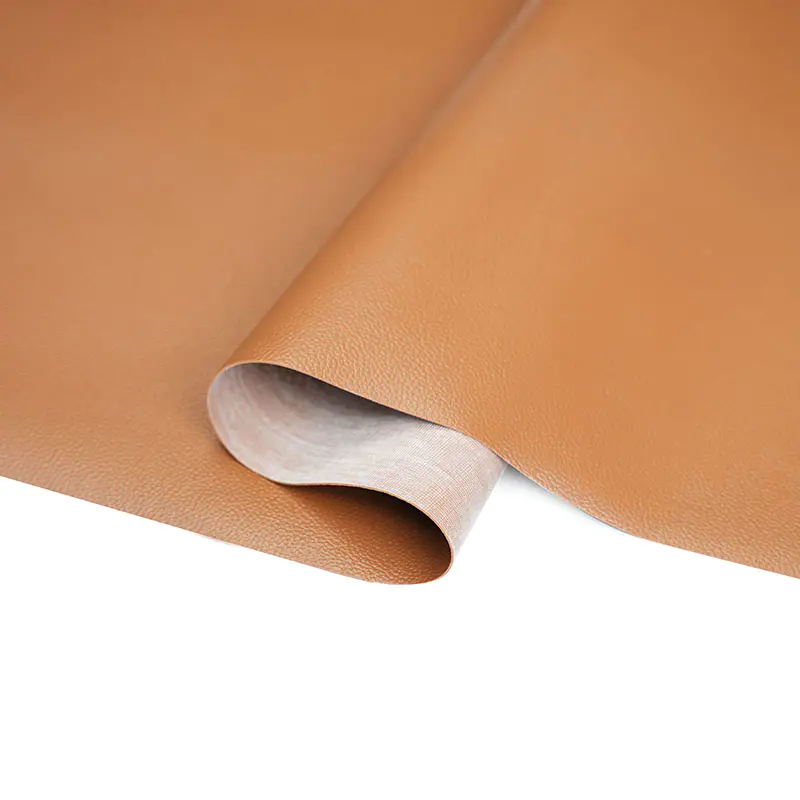
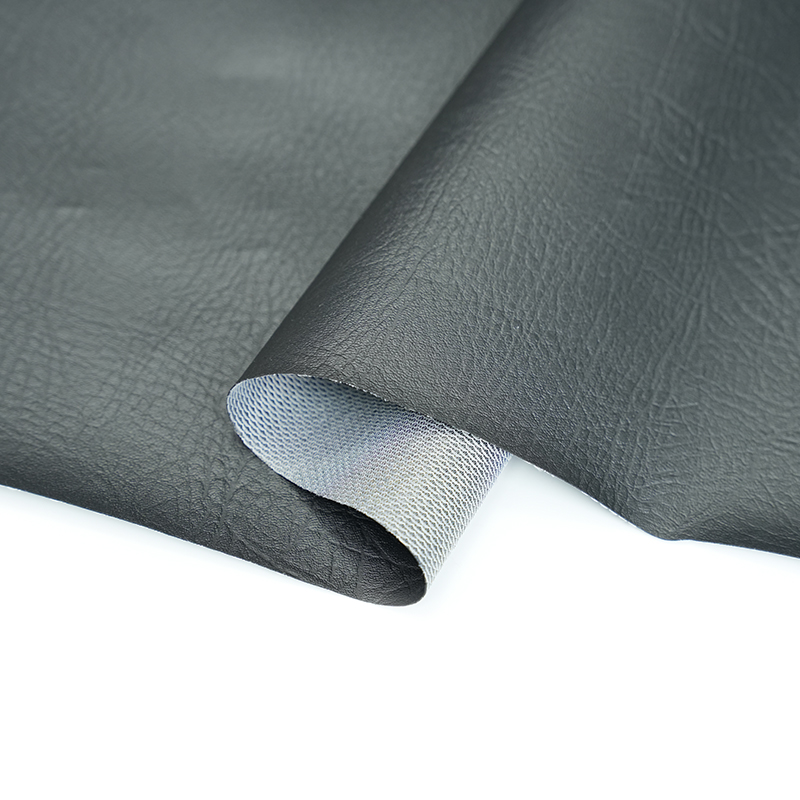
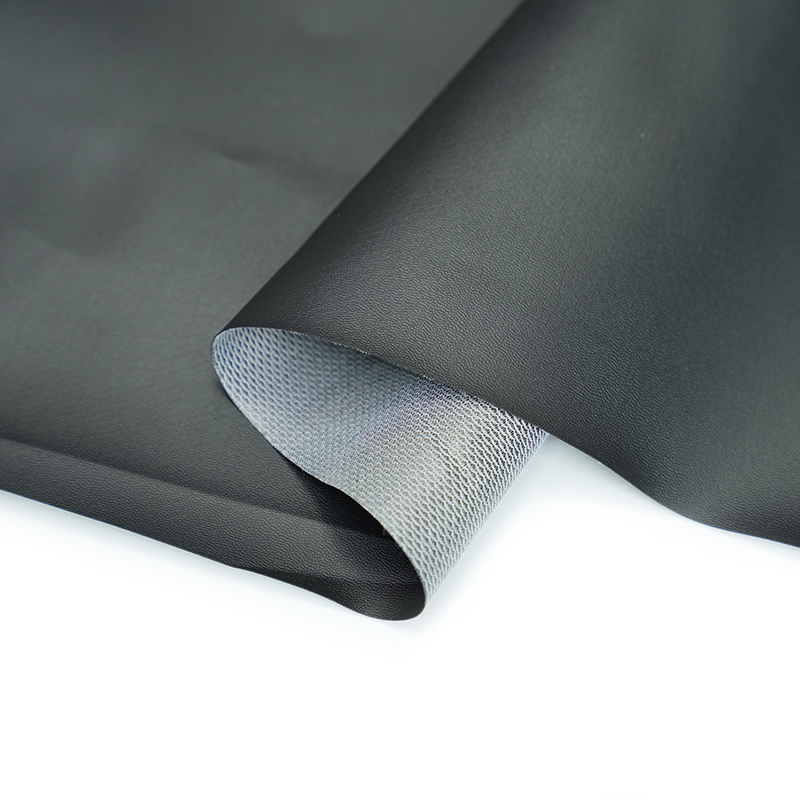
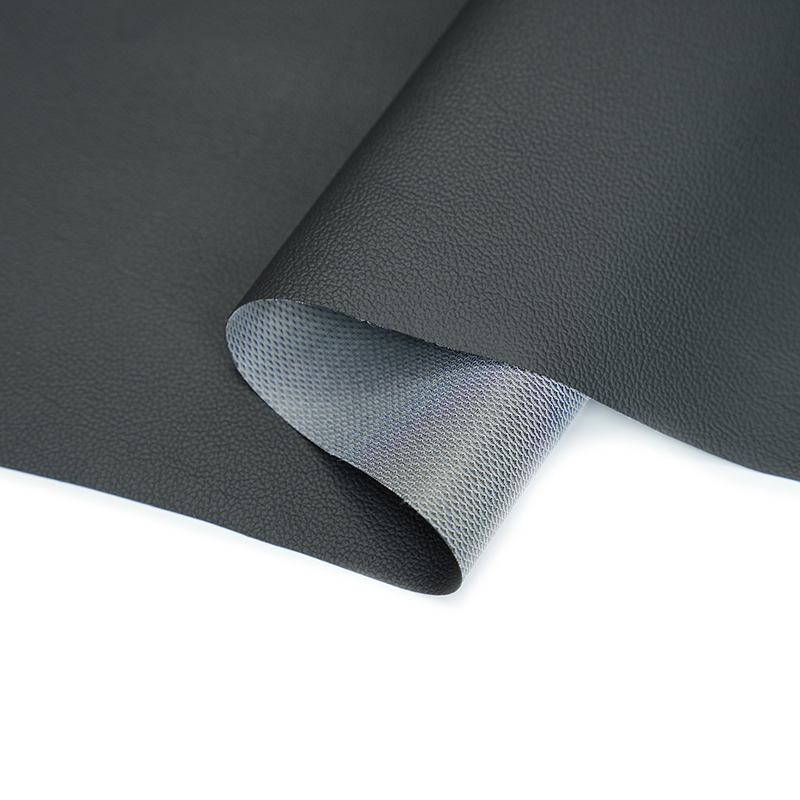
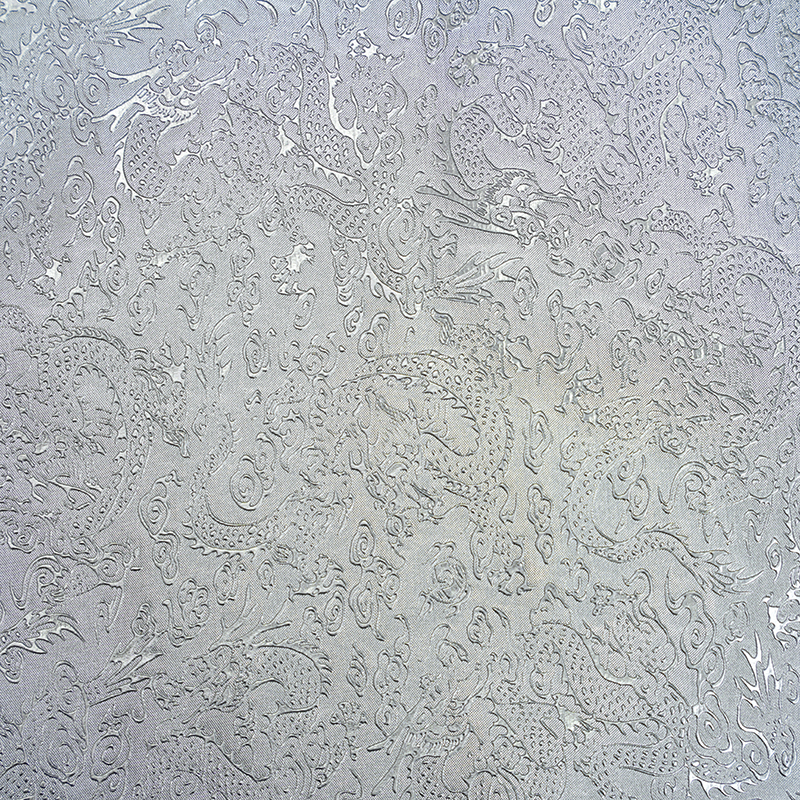 Metallic Film PVC Leather with Knitted Fabric Backing for BagsThis 0.6 mm metallic-finish PVC leather pairs a shiny surface with a knitted backing that adds tensile strength and tear resistance, making it a dependable choice for bag panels that face daily stress and flexing.View Product →
In any PVC leather composite, the backing fabric carries the mechanical load. The PVC coating supplies appearance, surface feel, water resistance, and abrasion protection, but it is not a strong structural material on its own. Under tension, a thin PVC coating stretches readily; under a concentrated point load, it punctures easily. The fabric provides the tensile strength, the tear resistance, and the dimensional stability that the finished material needs to function as the outer shell of a bag.
Different backing fabrics deliver very different performance levels. Lightweight knitted fabrics, typically 80 to 120 gsm, provide softness and drapability for decorative applications such as upholstery panels or cosmetic pouches. Standard woven polyester at 120 to 180 gsm offers balanced strength and flexibility for handbags and everyday casual bags. Oxford weaves at 180 gsm and above provide significantly higher tear strength and abrasion resistance, making them the usual starting point for load-bearing products such as travel luggage and tool bags.
The distinction is not only about fabric weight. Weave geometry, yarn count, and yarn tenacity all influence how well the fabric resists tearing once a needle has pierced it during sewing. A loose, coarse weave with low yarn count can be relatively heavy yet still tear easily along seam lines. Conversely, a tightly woven, balanced structure made from high-tenacity filament yarns can deliver excellent performance at moderate weight. This is why the backing specification must be evaluated on its technical merits rather than assumed from thickness alone.
Heavy load bags — laptop backpacks, tool bags, travel duffels, commuter totes, and rolling luggage — routinely carry several kilograms of weight. The load is not spread evenly across the bag surface. It concentrates at precise points: the seam lines where panels join, the handle base where the entire bag weight rests, the bottom panel that absorbs repeated contact with hard surfaces, and the zipper tape that endures constant pull stress during opening and closing.
When a metallic film PVC leather with an unsuitable backing fabric is used in these conditions, several failure modes emerge:
For manufacturers evaluating synthetic leather options, the mechanical performance of the backing fabric is the main factor that separates a true bag material from a decorative one. Our earlier article on why choosing PVC artificial leather improves bag durability considers this subject from a broader perspective.
For a metallic film PVC leather intended for heavy load bags, the backing fabric should meet several measurable criteria:
The fabric must resist elongation under load in both warp and weft directions. A common benchmark for load-bearing PVC leather is a tensile strength above 400 N/5 cm in both directions.
The material should resist rip propagation once a cut or puncture has started. Tests such as tongue tear and trapezoid tear provide quantitative measurements. For heavy-duty applications, a trapezoid tear strength above 60 N is a reasonable starting target.
The bond between the PVC coating and the backing fabric should withstand repeated flexing. A peel adhesion test result of at least 20 N/5 cm is commonly specified for structural applications.
The backing should exhibit low elongation at break and minimal shrinkage after lamination, so panels hold their shape during cutting, sewing, and long-term use.
A balanced plain or oxford weave with consistent yarn spacing delivers the best combination of strength, hand feel, and adhesion compatibility.
| Backing Type | Typical Weight | Key Strengths | Recommended Use |
|---|---|---|---|
| Lightweight knit | 80–120 gsm | Softness, drape | Decorative panels, light pouches |
| Standard woven polyester | 120–180 gsm | Balanced strength, moderate cost | Handbags, casual bags |
| Oxford weave | 180–300 gsm | High tear strength, abrasion resistance | Heavy load bags, travel luggage |
Choosing a material with the right backing is not only a technical preference; it is a product safety decision. A bag that tears at the handle seam while carrying a laptop or a set of tools can damage belongings and cause injury.
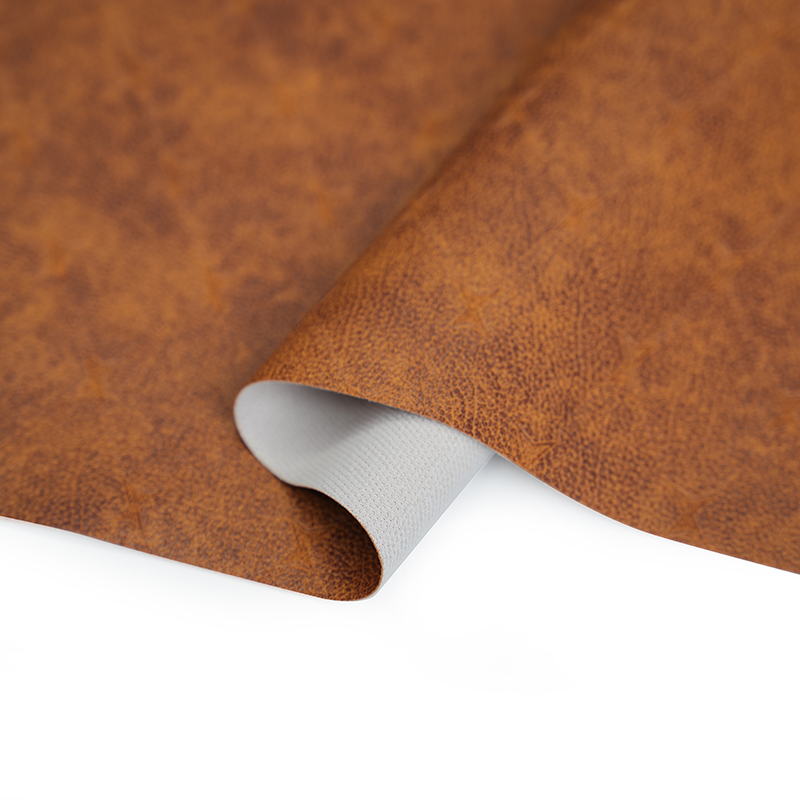
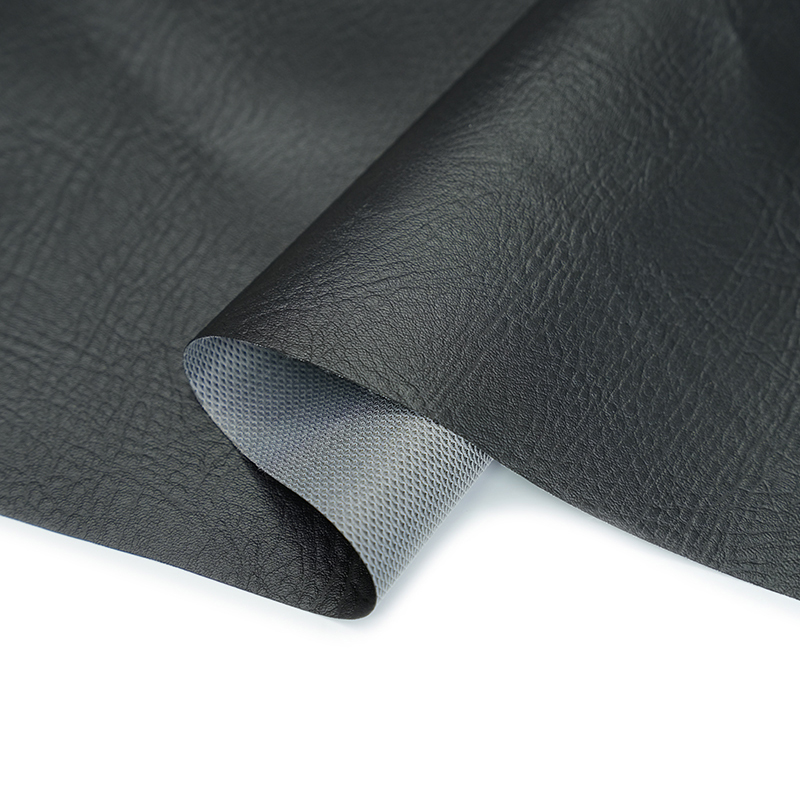
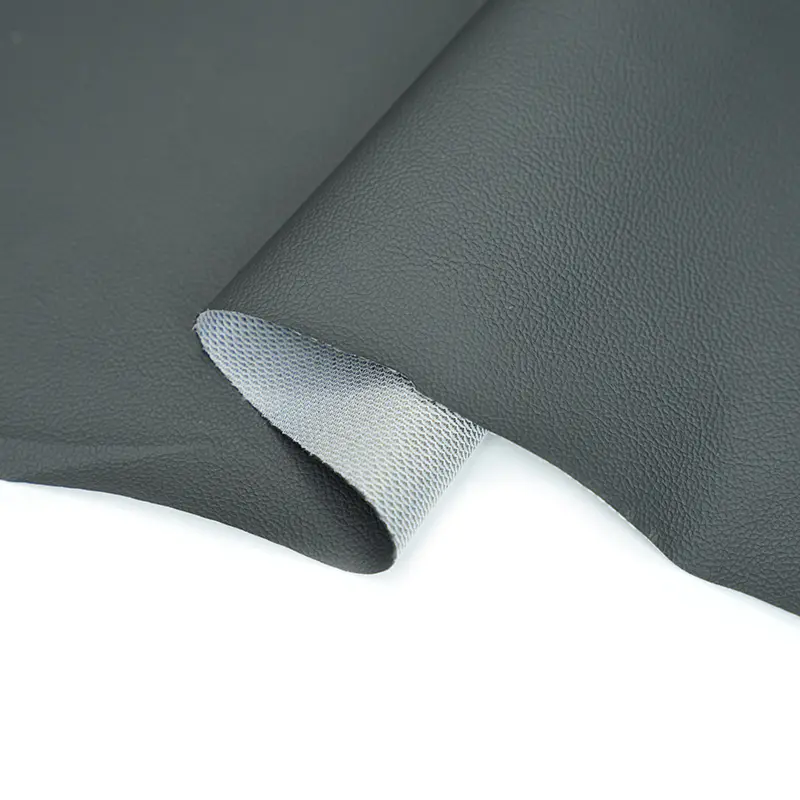
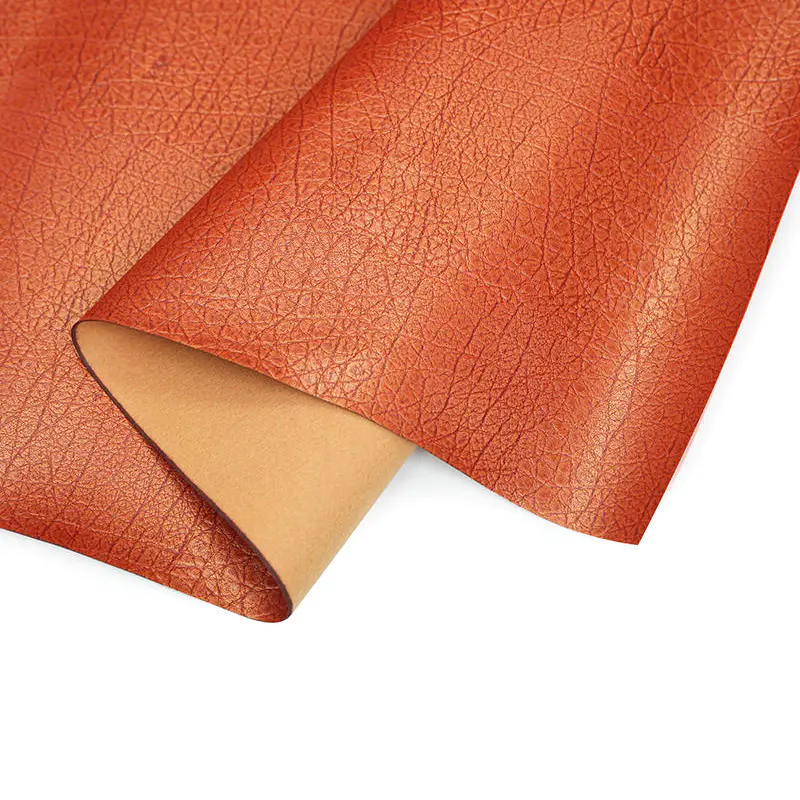
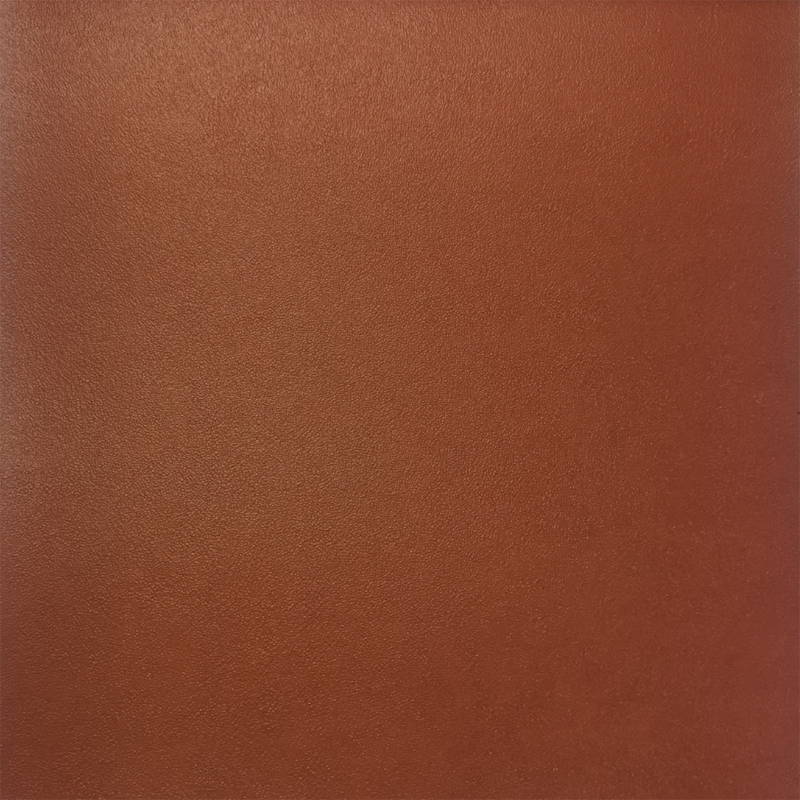 Waterproof PVC Synthetic Leather with Brushed Backing for LuggageAt 0.8 mm thick with a soft brushed backing, this waterproof PVC synthetic leather combines comfort and durability, offering reliable handle-seam strength and weather resistance for bags and luggage.View Product →
Manufacturers looking for a ready solution can evaluate structural-grade options such as our waterproof PVC synthetic leather for bags, which pairs a durable surface with a backing suited for regular carrying loads.
Bag manufacturers can verify the backing fabric specification before committing to a large order. The following checks are practical and require no laboratory equipment:
Selecting a manufacturer with in-house weaving and lamination capabilities simplifies this process, because the same facility that weaves the backing fabric can control its quality and adjust the specification for the intended application.
No. Lamination permanently bonds the PVC coating, the metallic film, and the backing fabric into a single composite. The backing cannot be removed or replaced without destroying the material, so the correct backing must be specified before production begins.
Not always. Areal density matters, but weave structure, yarn tenacity, and adhesion quality are equally important. A well-engineered 180 gsm oxford weave can outperform a poorly constructed 250 gsm fabric in both tear resistance and dimensional stability.
Yes, provided the full composite — film, coating, adhesive, and backing — is specified for the intended load. The metallic film is a surface feature; it does not inherently limit the material's structural capacity. The decisive factor is the backing fabric and the quality of lamination.
Request tensile strength results (for example ISO 1421 or ASTM D751), tear strength results (ASTM D2261 or D5587), peel adhesion results, and flex endurance results. These four data points give a reliable picture of how the material will behave under real usage conditions.
Metallic film PVC leather offers bag designers a rare combination of visual impact and production practicality. But its performance in heavy load applications depends largely on the component that no one sees: the backing fabric. By specifying a material with a properly engineered backing, and by verifying that specification with samples, test reports, and prototypes, manufacturers can build bags that look luxurious and perform reliably for years.
Add: No.285 Shashan Avenue, Zhouzhuang Town, Jiangyin City, Jiangsu Province, China.
Tel: +86-510-86903827
Rachel Wang:
+86-18651025719 (Phone)
[email protected] (Email)
Jessica Qian:
+86-13739165356 (Phone)
[email protected] (Email)
Cathay Xia:
+86-18021569150 (Phone)
[email protected] (Email)
Copyright © Jiangyin Jiangdong Plastic Co., Ltd. All Rights Reserved.Custom PVC Artificial Leather Manufacturers
