
Content
For procurement managers, product developers, and technical buyers, the distinction between faux leather and synthetic leather is more than semantic—it is a critical factor in material selection, cost modeling, and end-use performance. This guide provides a deep technical analysis of these materials, addressing specific application challenges with data-driven insights.
When sourcing waterproof faux leather for outdoor furniture, the first technical specification to evaluate is the hydrostatic head pressure rating, measured in millimeters (mmH2O). Materials intended for continuous outdoor exposure typically require a minimum rating of 1500mm to resist heavy rain. However, waterproofness is not solely about the topcoat; it involves the entire composite structure, including the backing fabric and seam integrity.
The industry distinguishes between water-resistant materials (which repel moisture temporarily) and waterproof materials (which prevent penetration under sustained pressure). For outdoor furniture, a waterproof rating with taped or welded seams is essential to prevent substrate saturation and mildew growth.
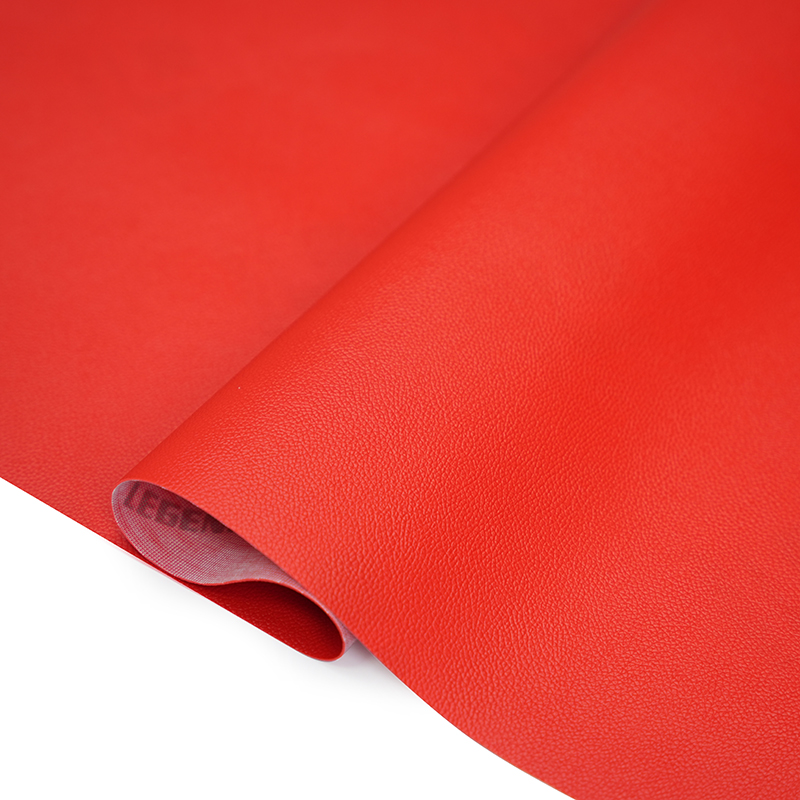
The polymer matrix determines the material's inherent water resistance and longevity under UV exposure. The table below compares the two primary chemistries.
| Property | PVC Artificial Leather | PU Synthetic Leather |
|---|---|---|
| Inherent Water Resistance | Excellent (hydrophobic polymer structure) | Good, but requires robust topcoat |
| UV Stability (without additives) | Moderate (can plasticize and stiffen) | Higher inherent stability |
| Typical Applications (Outdoor) | Marine upholstery, heavy-duty furniture | Light-duty outdoor cushions, contract furniture |
| Cold Flex Performance | Requires specialized low-temp plasticizers | Generally better at low temperatures |
Outdoor furniture materials must withstand prolonged UV exposure without significant color shift or loss of mechanical properties. Modern formulations incorporate UV absorbers (like benzotriazoles) and hindered amine light stabilizers (HALS) into the topcoat and the polymer matrix. Accelerated weathering tests (ASTM G154, Xenon Arc) are essential for verifying performance.
Manufacturing consistency is key to waterproof performance. Facilities like Jiangyin Jiangdong Plastic Co., Ltd., founded in 1999, utilize imported production lines from Germany and Japan that integrate weaving, dyeing, and film-sticking. This closed-loop process ensures that the waterproof film is uniformly applied, eliminating pinholes and weak spots that can lead to leakage. With a manufacturing area of 35,000 square meters and an annual output exceeding 60 million meters, such scale allows for statistical process control (SPC) to maintain consistent quality across batches.
To compare synthetic leather vs bonded leather durability, one must first understand their composition. Synthetic leather (PU or PVC) is a coated fabric where a polymer layer is applied to a textile backing. Bonded leather, also known as reconstituted leather, is made by shredding leather fibers, mixing them with a polyurethane binder, and rolling them into sheets, which are then often coated with a polyurethane top layer. Bonded leather contains leather fiber but is fundamentally a composite material.
Durability is best quantified through standardized tests. The following data represents typical performance ranges.
| Material Type | Typical Cycles to Failure | Failure Mode |
|---|---|---|
| High-Performance PU Synthetic Leather | 50,000+ cycles | Topcoat wear, fabric exposure |
| PVC Artificial Leather (Standard) | 25,000 - 40,000 cycles | Surface wear, plasticizer loss |
| Bonded Leather (Reconstituted) | 5,000 - 15,000 cycles | Surface flaking, fiber separation |
| Material Type | Cycles at 23°C (Room Temp) | Cycles at -10°C (Cold Flex) |
|---|---|---|
| Premium PU Synthetic | >100,000 (no crack) | >50,000 (no crack) |
| PVC Artificial (Standard) | >100,000 (no crack) | 15,000 - 30,000 (may crack) |
| Bonded Leather | 20,000 - 40,000 (often cracks) | <10,000 (brittle failure) |
For high-traffic environments like hotels, restaurants, and offices, the lower initial cost of bonded leather is often negated by its shorter lifespan. While premium synthetic leather may have a higher upfront cost, its superior abrasion and flex resistance result in a lower cost-per-use over a 5-10 year period.
In commercial settings, materials are subjected to repeated loading, cleaning chemicals, and body oils. Synthetic leathers, particularly those with a protective polyurethane topcoat, resist degradation from these factors better than bonded leather, which is prone to delamination and surface peeling.
Identifying legitimate eco friendly faux leather suppliers bulk requires verifying specific manufacturing criteria. True eco-friendly formulations go beyond marketing claims.
Sustainable options often feature backings made from recycled polyester (rPET) derived from plastic bottles. Additionally, manufacturers may incorporate mechanically recycled post-industrial scrap back into the production process.
Bulk buyers require suppliers capable of consistent quality and volume. Key questions include: Can the supplier provide standard colors in 500-5000 meter rolls? What is the lead time for container shipments (typically 20-40 foot containers)? Do they offer supply contracts with fixed pricing?
Established in 1999, Jiangyin Jiangdong Plastic Co., Ltd. exemplifies the manufacturing infrastructure required for reliable bulk supply. With a 35,000-square-meter facility and advanced production lines integrating weaving, dyeing, and film-sticking (imported from Germany, Japan, and Taiwan), the company achieves an annual output exceeding 60 million meters of artificial leather, including sofa leather and car mat materials. Their long-standing export channels to Southeast Asia, the Middle East, and South Africa demonstrate logistical capability and cross-border regulatory familiarity, critical factors for B2B procurement.
Selecting heat resistant synthetic leather for automotive interiors requires meeting stringent OEM specifications. Two critical tests are heat aging (e.g., 120°C for 500 hours, assessing color change, cracking, and shrinkage) and fogging (ISO 6452), which measures volatile condensates on the windshield. Materials with low fogging numbers are essential for driver safety.
The choice between PVC and PU for automotive applications depends on the specific interior zone (seating, dash, door panels).
| Requirement | PVC Artificial Leather | Advanced PU Blends |
|---|---|---|
| Heat Aging Resistance (Long-term) | Good, but can lose plasticizers (stiffening) | Excellent, lower plasticizer migration |
| Fogging Performance | Requires low-fog plasticizers | Inherently low-fog |
| Tactile Feel (Haptics) | Can be warm and slightly tacky | Cool, soft, leather-like |
| Scratch/Mar Resistance | Good, can be formulated for high durability | Very good, especially with two-coat systems |
The backing fabric significantly influences the composite's thermal stability. Polyester knit backings offer better dimensional stability under heat compared to cotton or lower-melting-point blends. The integration of weaving and dyeing in a single facility, as practiced by established manufacturers, allows for precise control over backing tension and shrinkage, critical for automotive die-cutting processes.
Producing automotive-grade synthetic leather requires seamless integration across the supply chain. In-house control of weaving (for backing consistency), dyeing (for colorfastness), and coating (for topcoat performance) minimizes variability. This vertical integration, found in facilities with advanced German and Japanese lines, ensures that the final material meets the tight tolerances demanded by automotive Tier 1 suppliers.
Peeling in faux leather, often searched as how to clean faux leather couch without peeling, is primarily a failure of the protective topcoat. This thin layer, usually polyurethane, is designed to protect the underlying polymer from abrasion, UV light, and cleaning chemicals. Over time, hydrolysis (reaction with moisture), plasticizer migration (in PVC), or aggressive cleaning agents can cause this layer to embrittle and delaminate from the base material.
For high-value commercial furniture with minor peeling, professional re-coating services can apply a new pigmented polyurethane topcoat, effectively restoring the surface without the cost of full reupholstery.
The selection between faux leather and synthetic leather variants—whether PVC, PU, or bonded—hinges on a precise match between material properties and end-use demands. By analyzing technical data sheets for waterproof ratings, abrasion cycles, heat aging performance, and cleaning protocols, procurement professionals can make informed decisions that balance performance, aesthetics, and total cost of ownership.
Yes, the terms are often used interchangeably in the industry. Both refer to man-made materials designed to imitate animal leather. "Synthetic leather" is a broad category encompassing both PU (polyurethane) and PVC (polyvinyl chloride) types, as well as other polymer-based coated fabrics.
The primary standard for flexing resistance is ISO 32100 (flexometer test). Abrasion resistance is commonly tested under ISO 5470 (Martindale method) or ASTM D3389 (Taber abraser), depending on the application. For automotive, specific OEM standards like FLTM BN 108-13 (Ford) or GMW 14129 (GM) are often used.
Recycling is challenging but possible. Mechanical recycling involves grinding post-industrial scrap into filler for new products. Some advanced PU leathers with polyester backings can be chemically recycled to recover the polyester. However, most post-consumer faux leather currently ends up in landfills. Procurement can favor suppliers using recycled backing materials.
Request third-party test reports or certificates. Look for REACH compliance declarations, Oeko-Tex Standard 100 certification (for low chemical emissions), and specific documentation on phthalate content (e.g., test report to EN ISO 14389). Ask for Material Safety Data Sheets (MSDS) to identify solvent-based vs. water-based coatings.
This phenomenon, often called "blooming" or "spew," is typically caused by plasticizers or other additives migrating to the surface of the material over time, particularly in PVC. It can also result from soap residue left after cleaning. Proper formulation with fast-fusing, polymeric plasticizers can minimize this, and it can often be gently wiped away with a damp cloth.
Add: No.285 Shashan Avenue, Zhouzhuang Town, Jiangyin City, Jiangsu Province, China.
Tel: +86-510-86903827
Rachel Wang:
+86-18651025719 (Phone)
[email protected] (Email)
Jessica Qian:
+86-13739165356 (Phone)
[email protected] (Email)
Cathay Xia:
+86-18021569150 (Phone)
[email protected] (Email)
Copyright © Jiangyin Jiangdong Plastic Co., Ltd. All Rights Reserved.Custom PVC Artificial Leather Manufacturers


 English
 中文简体
中文简体