
Content
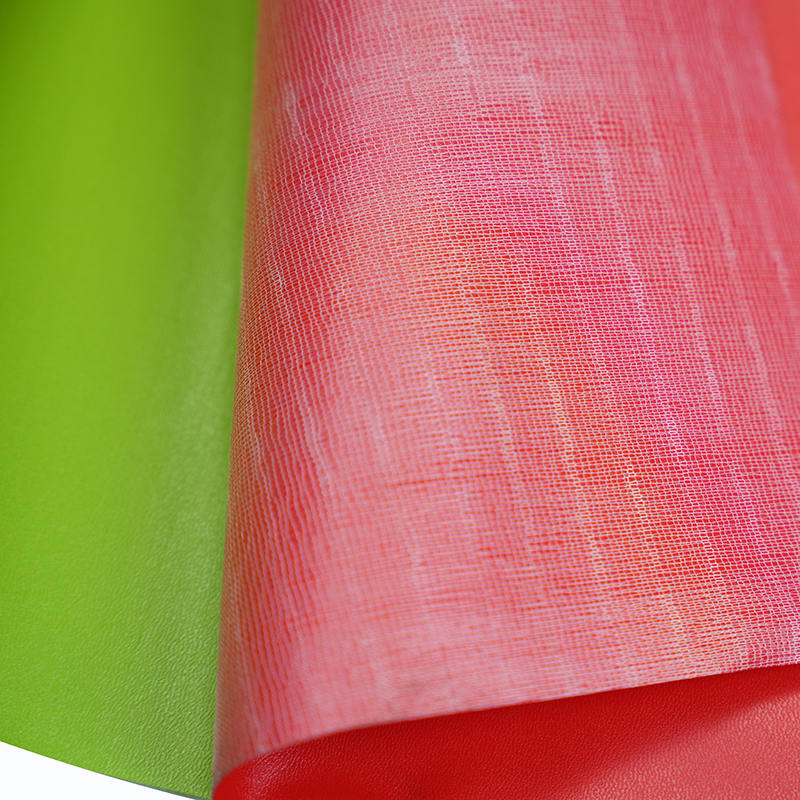
The drive to print on artificial leather stems from two powerful market forces: mass customization and brand differentiation. In today's footwear industry, consumers seek unique products, while brands need efficient ways to showcase logos and complex designs. Printing artificial leather for shoes making transforms standard PU, PVC, or bio-based synthetic materials into high-value components, enabling everything from limited-edition sneakers to uniform corporate footwear.
Applications span all footwear segments. Athletic shoes use printed overlays for lightweight branding; fashion boots feature intricate artistic prints; casual loafers employ subtle textured patterns. The technology unlocks creativity without the cost and limitation of traditional leather dyeing or embossing.
Selecting the optimal printing method is the most critical decision in the process. The choice hinges on order quantity, design complexity, color count, budget, and the required durability. There is no one-size-fits-all solution, but a clear understanding of the three primary technologies will guide you to the best fit for your printing artificial leather for shoes making project.
Inkjet-based digital printing deposits microscopic ink droplets directly onto the leather surface. This method is revolutionary for its lack of setup requirements (no screens or plates) and its ability to reproduce photorealistic images with unlimited colors.
This technology is ideal for the booming custom sneaker market. It allows for single-pair production runs where each shoe can have a unique design. A company like PrintTech Footwear Solutions specializes in this, using pre-treatment and specialized ink sets to ensure the print adheres flexibly to the PU substrate, surviving the bending and abrasion of a shoe's life.
This process involves printing a mirror image onto a release paper or film, then using heat and pressure to transfer the ink film onto the leather. It is exceptionally efficient for repeating the same design across thousands of units.
The key to this method is the quality of the heat transfer film. The film carries the ink layer, which, when heated, releases and bonds to the leather's surface. It's perfect for bold logos, geometric patterns, and solid color blocks on sports shoes or children's footwear, offering excellent opacity and consistency at a competitive cost for large orders.
A mesh screen is used to transfer ink onto the leather in specific areas. Each color requires a separate screen. Renowned for its vibrant, opaque ink laydown and ability to use specialty inks (metallics, fluorescents, high-density textures).
For prototyping and small batches, manual or semi-automatic screen printing is invaluable. It allows designers to test thick, textured inks or specific Pantone colors without the high setup cost of industrial methods. A table-top small batch screen printing machine is a common sight in design studios for creating sample uppers before committing to mass production.
| Method | Best For | Design Complexity | Setup Cost | Cost per Unit (High Vol.) |
| Digital Printing | Prototypes, Customization, Photorealistic Designs | Unlimited | Very Low | High |
| Heat Transfer | Large Batches, Solid Colors/Logos, Consistent Repeats | Low to Moderate | Moderate | Very Low |
| Screen Printing | Vibrant Colors, Specialty Inks, Small to Mid Batches | Low (per color) | High (per color) | Low |
The success of any print lies beneath the surface—in the compatibility between the leather substrate and the ink chemistry. Not all artificial leathers are created equal, and using the wrong ink is a primary cause of failure, such as cracking, peeling, or color fading.
PU leather is generally the most receptive due to its slightly porous surface. PVC requires careful pre-treatment to ensure adhesion. Newer eco-friendly synthetics made from recycled materials or bio-polymers present unique challenges and must be tested rigorously.
Regulatory pressure and consumer demand are driving a major shift toward sustainable practices. Eco-friendly water-based ink contains significantly lower levels of volatile organic compounds (VOCs) than traditional solvent-based inks. Leading material innovators like GreenChem Coatings have developed advanced water-based polyurethane ink systems that offer excellent flexibility, abrasion resistance, and wash fastness without the environmental and health hazards. They are becoming the standard for brands targeting eco-conscious markets or requiring compliance with strict international standards.
A disciplined workflow is essential to transform a digital design into a durable, wearable print. Skipping or rushing any step can compromise the final product's quality.
Step 1: Surface Preparation. The leather is cleaned of dust, oils, and release agents. For challenging materials, a pre-treatment (primer, flame, or plasma) is applied to create an optimal bonding surface.
Step 2: Printing Process Execution. The chosen technology (digital, heat transfer, screen) is employed under controlled environmental conditions (temperature, humidity). In-line quality control checks for color accuracy, registration, and defects.
Step 3: Post-Printing Fixation. The printed material passes through a dryer or curing oven. For digital and screen prints, this step evaporates carriers and initiates chemical cross-linking. For heat transfer, it ensures the film fully releases and adheres.
Step 4: Testing & Finishing. A final finish (e.g., a protective clear coat) may be applied. Samples must then pass standardized tests for colorfastness (to light and rubbing), flex resistance (Ross Flex test), and wet/dry abrasion (Martindale test) before being approved for shoe production.
Once you understand the technology, you must decide on the execution model. This depends on your scale, capital, and core competency.
Bringing printing in-house requires significant investment in equipment, facility space (with ventilation for curing), chemical management, and skilled technicians. It offers maximum control and flexibility for prototyping but is only cost-effective at very high, consistent volumes. The learning curve and maintenance should not be underestimated.
For most brands and manufacturers, partnering with a specialized printed PU leather for sports shoes manufacturer supplier is the most efficient path. Companies like GlobalSynthetics LLC operate at economies of scale, investing in the latest machinery and R&D. They offer:
When vetting a supplier, request physical samples, inquire about their testing protocols and compliance certifications (e.g., ISO, REACH), and clearly communicate your performance requirements.
Ink cracking is primarily a failure of ink elasticity. The solution is multi-faceted: 1) Use an ink formulated specifically for flexible substrates—look for a high elongation-at-break percentage. 2) Ensure the leather is properly pre-treated to create a strong bond, so the ink moves with the substrate, not on top of it. 3) Avoid over-curing, which can make the ink film brittle. Conduct a full flex test (like the Ross Flex test) on a finished sample before production.
MOQs vary drastically by technology. For digital printing on PU leather for custom sneakers, MOQs can be as low as a single square meter or one pair's worth of material, though the per-unit cost is high. For screen or heat transfer printing, MOQs typically start between 100-500 linear meters due to setup costs. A professional printed PU leather for sports shoes manufacturer supplier will often have higher MOQs (1000m+) but a much lower cost per meter. Always discuss MOQ tiers during quoting.
Yes, but with important considerations. Digital printing can capture some surface texture but may struggle with deep embossing, leading to uneven ink coverage. Screen printing can work well if the screen mesh can conform to the texture. Heat transfer film often provides the best coverage on embossed leather, as the film wraps around the texture during the hot-press stage. A test run on your specific textured material is essential.
For mid-sized runs (e.g., 500-5000 pairs), the economics shift. Digital printing has a near-zero setup cost but a high, constant per-unit cost. Screen or heat transfer has a high initial setup cost (for screens/film) but a very low per-unit cost. There is a crossover point where the total cost of traditional methods becomes cheaper. This point depends on design complexity (number of colors). A detailed cost-breakdown analysis from your supplier is crucial for mid-sized projects.
This is a key trend, especially for premium fashion and athletic shoes. The "hand feel" is often ruined by a thick, plastic-like ink layer or a stiff protective topcoat. To maintain softness: 1) Use high-penetration or low-viscosity inks that don't sit heavily on the surface. 2) Opt for micro-foaming inks or delicate finishing coats specifically designed to retain flexibility. 3) Work with your ink supplier to test additive packages that enhance softness without sacrificing durability.
Add: No.285 Shashan Avenue, Zhouzhuang Town, Jiangyin City, Jiangsu Province, China.
Tel: +86-510-86903827
Rachel Wang:
+86-18651025719 (Phone)
[email protected] (Email)
Jessica Qian:
+86-13739165356 (Phone)
[email protected] (Email)
Cathay Xia:
+86-18021569150 (Phone)
[email protected] (Email)
Copyright © Jiangyin Jiangdong Plastic Co., Ltd. All Rights Reserved.Custom PVC Artificial Leather Manufacturers


 English
 中文简体
中文简体